
Millions of American households depend on propane for everything from summer barbecues to keeping the house warm through winter. While these systems are known for their reliability, occasional issues can interrupt that steady flow of energy. Most problems boil down to three common culprits: low pressure, potential leaks, or a failing component. Understanding these challenges is the first step toward solving them.
This guide is designed to give you the confidence to safely diagnose what is happening with your system. We will walk through the essential steps for propane tank troubleshooting, explain which tools you need, and clarify when it is time to call a professional. A well maintained system is the foundation of a comfortable home, and our insights on residential propane services can help ensure your setup is always ready when you need it.
Diagnosing and Fixing Low Pressure Problems
The most common sign of low pressure is a weak or flickering flame on your stove or other appliances. Instead of a steady, vibrant blue flame, you might see a lazy, yellow one that struggles to stay lit. Other clues include appliances taking much longer than usual to heat up or pilot lights that keep going out. When you notice these symptoms, it is time to investigate.
Before assuming a complex mechanical failure, start with the simplest explanation. An empty tank is the number one cause of low pressure. Your first step should always be to check the gauge on your tank. If the needle is in or near the red, you have found your problem. For smaller tanks without a gauge, a digital tank scale can give you an exact reading.
If the tank has plenty of fuel, the next step is to check the pressure directly. Here is how to fix low propane pressure in many common scenarios:
- Check the Fuel Level First: Confirm your tank is not empty. This simple check solves the majority of low pressure issues and prevents unnecessary troubleshooting.
- Verify with a Pressure Gauge: Attach a calibrated pressure gauge to the tank valve. For most residential appliances, you should see a reading around 11 to 12 PSI. A low reading here confirms a pressure problem originating at the tank.
- Reset the Regulator: Sometimes, a regulator’s internal safety mechanism can trip, restricting gas flow. To reset it, close the tank valve completely, disconnect the hose, wait a minute, and then reconnect it. Slowly open the valve to allow the pressure to equalize.
Following these steps can often restore normal operation without needing a service call.
How to Safely Detect and Address Gas Leaks
Of all the maintenance tasks a homeowner can perform, leak detection is the most critical. Propane is naturally odorless, so manufacturers add a chemical called ethyl mercaptan to give it a distinct, unpleasant smell similar to rotten eggs or sulfur. If you notice this odor, you must act immediately. The most reliable way to confirm a leak is with a simple propane tank leak test.
Here is how to perform one safely:
- Create a solution of equal parts dish soap and water in a spray bottle or bowl.
- With the tank valve closed, apply the soapy solution generously to the tank valve, regulator, and all hose connections.
- Slowly open the tank valve and watch closely. If you see new bubbles forming and growing, you have found a leak.
Other subtle signs of a leak can include:
- A faint hissing sound near the tank or its connections.
- A sudden and unexplained increase in your fuel consumption.
- Weak appliance flames even when the tank is full.
If you confirm a leak, immediately close the tank valve. Extinguish any open flames, and do not use any phones, light switches, or other electronics nearby. A small leak at a fitting can sometimes be fixed by gently tightening the connection with a wrench. If the bubbling continues, it is a clear signal to call a professional. These steps are part of the essential propane safety protocols that every homeowner should know to protect their property and family.
Identifying a Faulty Regulator or Gauge
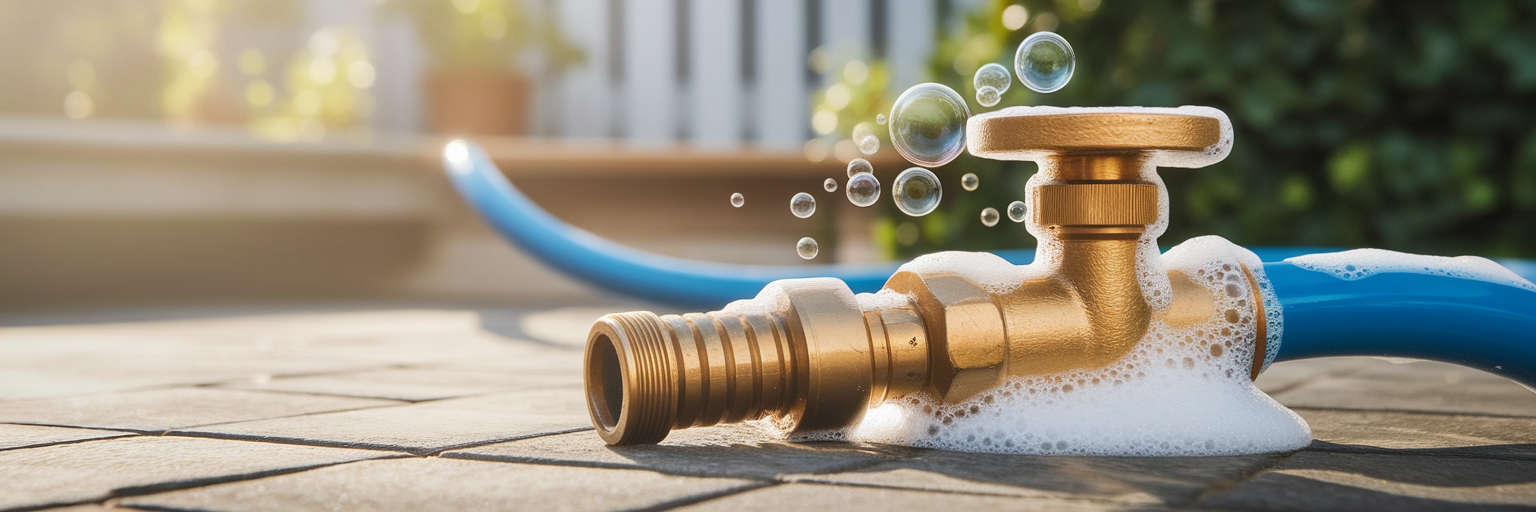
Sometimes, what appears to be a low pressure problem is actually a sign of a faulty propane tank regulator. The regulator is the round, disc shaped device connected to your tank valve. Its job is to reduce the high pressure inside the tank to a safe, consistent level for your appliances. When it fails, it can cause symptoms that mimic an empty tank, such as sooty orange flames, poor appliance performance, or pilot lights that will not stay lit.
Regulators can fail due to internal wear, debris clogging the mechanism, or a stuck spring. To inspect it, first close the tank valve and disconnect the regulator. Look for any visible signs of corrosion, cracks, or blockages in the inlet and outlet ports. The key is to isolate the problem. If a pressure gauge shows strong pressure coming directly from the tank but weak pressure after the regulator, you have found the culprit. Regulators are safety devices that cannot be repaired. If you determine yours is faulty, it must be replaced.
Your Essential Propane Troubleshooting Toolkit
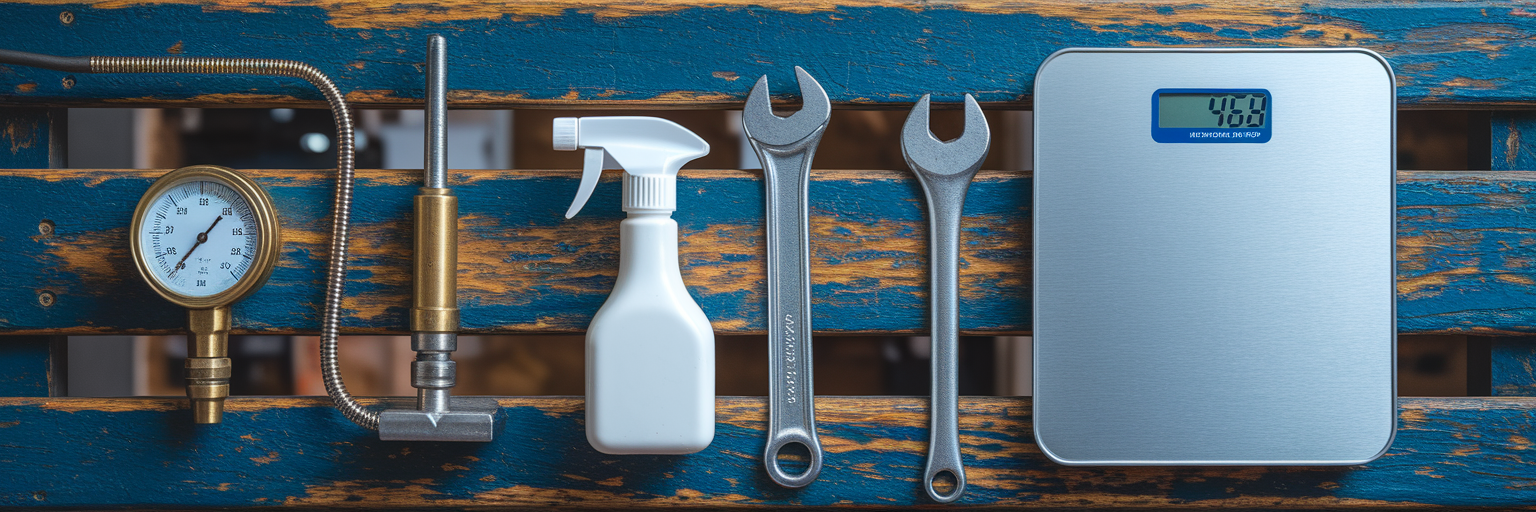
Having a few basic tools on hand makes propane tank troubleshooting far more effective and safe. You do not need a professional mechanic’s toolbox, just a few key items to diagnose the most common issues accurately. Assembling this simple kit empowers you to identify problems quickly, saving you from the frustration of a cold grill or a non-functioning heater. Having the right propane equipment is the first step to effective maintenance.
| Tool | Primary Function | Pro-Tip for Homeowners |
|---|---|---|
| Calibrated Pressure Gauge | Measures the exact pressure output from the tank valve. | Ensure the gauge is designed for propane and reads in PSI to accurately diagnose pressure issues. |
| Soapy Water Solution & Spray Bottle | Used to perform a bubble test to safely detect gas leaks. | A 50/50 mix of dish soap and water works perfectly. Apply generously to all connections. |
| Adjustable Wrench | Tightens loose fittings and connections, a common cause of small leaks. | Use gentle, firm pressure. Over-tightening can damage the brass fittings. |
| Digital Tank Scale | Provides an accurate reading of the remaining fuel level. | This eliminates the guesswork of whether you have a pressure problem or just an empty tank. |
This table outlines the core tools every homeowner should have for basic propane system diagnostics. These items are affordable, easy to use, and can help you safely identify the root cause of most common issues.
When You Must Call a Certified Professional
While many common issues are fixable, some situations demand professional expertise. The most important rule of propane safety is: when in doubt, make the call. Attempting to fix a serious problem without proper training can be dangerous. Knowing when to call a propane technician is just as important as knowing how to tighten a hose.
Contact a certified professional immediately in these scenarios:
- You smell propane even after you have closed the tank valve.
- Your bubble test confirms a leak that does not stop after you gently tighten the fitting.
- You see significant physical damage, such as deep rust, dents, or cracks on the tank, valve, or regulator.
- You have persistent low pressure issues even with a full tank and a regulator that appears to be working.
If you suspect a serious leak or other major issue, evacuate the area first. If it is safe to do so, shut off the main valve on your tank. Then, from a safe distance, call for help. If you are facing any of these situations, it is time to contact a certified technician. You can find a qualified professional in your area to ensure the problem is resolved safely and correctly.
Maintaining a Safe and Reliable Propane Supply
Keeping your propane system in top condition is a blend of classic techniques and modern awareness. Proactive maintenance is your best defense against unexpected problems. By adopting a routine of performing quick propane tank safety checks, you can catch small issues before they become major headaches. A simple visual inspection of the hoses, connections, and tank body each time you use or refill your tank can reveal early signs of wear and tear.
By understanding the troubleshooting steps outlined in this guide, you can ensure your appliances run efficiently, extend the life of your equipment, and maintain a safe home environment. Knowledge and preparation are the keys to a reliable propane supply. For more tips on propane maintenance and safety, you can explore our blog for ongoing insights.
About Jennifer Whitaker
Propane industry expert and content contributor for MyPropane.com.
View all posts by Jennifer Whitaker →Related Articles

When Does Your Propane Tank Need Immediate Attention
Oct 20, 2025 • 7 min read
Discover the critical indicators, from strange smells to performance issues, that signal your propane system requires professional attention.

A Practical Guide to Sustainable Propane Use
Nov 7, 2025 • 7 min read
This guide offers actionable strategies for reducing propane use, saving money, and minimizing your environmental impact.