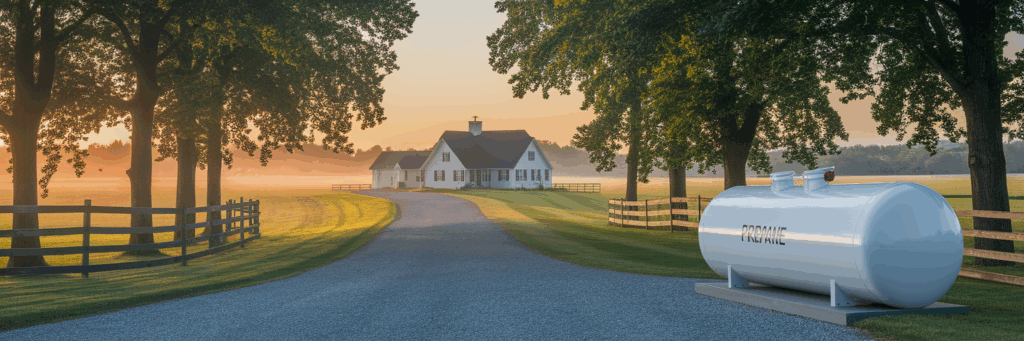
The Unique Challenges of Rural Propane Management
For millions of people living in rural areas, a propane tank is more than just a fuel source; it is a lifeline. It provides the heat, hot water, and power that make a home comfortable and a farm operational. This reliance means that managing propane in remote areas carries a unique set of responsibilities. Unlike in suburban settings where suppliers are just around the corner, rural properties often contend with significant distances and unpredictable access.
A muddy track after a spring thaw or a snowed-in driveway in winter can easily prevent a delivery truck from reaching you. These access issues are not minor inconveniences; they can disrupt your heat and power for days. The reality of living far from town also means that emergency response times are naturally longer. A small issue that could be quickly addressed in a city becomes a much more serious concern when help is an hour or more away.
Because of these factors, proactive safety and management are not simply about following regulations. They are about ensuring the well-being of your family and maintaining the continuity of your homestead or agricultural business. Understanding the specific difficulties of rural propane ownership is the first step toward building a robust and reliable energy plan.
Strategic Tank Placement for Safety and Access

After acknowledging the challenges of rural propane use, the first practical step is ensuring your tank is positioned correctly. Proper placement is a foundational safety measure that prevents future problems. It all starts with a stable, level base, typically a concrete pad. In rural settings where soil can shift from frost heave or erosion, this foundation prevents the tank from tipping, which could strain connections and cause a leak. For anyone setting up a new system, exploring our residential propane solutions can provide a clear path to a compliant and secure installation.
Beyond the base, safe propane tank placement involves adhering to specific clearance standards. These rules, outlined by the National Fire Protection Association (NFPA), are designed to keep ignition sources safely away from the tank. Translating these codes into a practical guide helps homeowners visualize a secure setup.
| Tank Capacity (Water Gallons) | Minimum Distance from Building | Minimum Distance from Property Line | Minimum Distance from Ignition Source |
|---|---|---|---|
| Up to 125 gal | 10 feet | 10 feet | 10 feet |
| 126 – 500 gal | 10 feet | 10 feet | 10 feet |
| 501 – 2,000 gal | 25 feet | 25 feet | 25 feet |
| Over 2,000 gal | 50 feet | 50 feet | 50 feet |
Note: These are common minimums based on NFPA 58 guidelines for aboveground tanks. Always confirm with your local authority or propane supplier, as regional regulations may vary.
Finally, consider the logistics of propane delivery for rural homes. Your supplier needs a clear, wide path to the tank. Think about the turning radius of a large truck and ensure there are no low-hanging branches or other overhead obstructions. On farms or properties with heavy machinery, installing physical barriers like bollards around the tank is a wise investment. These simple posts can prevent a costly and dangerous collision with a tractor or other equipment.
Proactive Inspections and Maintenance Routines
With your tank properly placed, the focus shifts to ongoing care. A consistent inspection routine empowers you to spot potential issues before they become serious problems. This does not require technical expertise, just a few minutes of your time and a watchful eye. Creating a simple propane tank inspection checklist can help you stay organized and thorough. During your checks, you are looking for visible signs of wear and tear that could compromise the tank’s integrity.
Your routine should include the following steps:
- Check for significant rust, corrosion, or flaking paint on the tank’s surface.
- Look for any physical damage, such as dents or scratches, especially around valves and fittings.
- Ensure the tank’s data plate is clean and legible.
- Clear away any flammable materials, such as dry grass, leaves, or wood, from a 10-foot radius around the tank.
- Confirm the tank is still level on its concrete pad or blocks.
- Perform a leak test with a soap-and-water solution on all visible pipes and connections.
To perform a leak test, simply mix soap and water in a spray bottle and apply it to the tank’s fittings and valves. If you see bubbles forming, it indicates a potential leak, and you should contact your propane supplier immediately. It is vital to understand the line between homeowner maintenance and professional service. While these visual checks are encouraged, any repairs or work on valves must be handled by a qualified technician. Minor surface rust can often be addressed with proper cleaning and painting, but widespread corrosion requires an expert assessment. For additional guidance on upkeep, feel free to browse our blog for more detailed articles.
Understanding Critical Safety Rules and Regulations

Following safety rules is not just about compliance; it is about understanding the principles that keep your property and family safe. A core concept for propane tank safety rural property owners should know is the 80% fill rule. Propane is stored as a liquid, and it needs space in the tank to expand into a gas as temperatures rise. This rule prevents the tank from becoming over-pressurized on a hot day, which could trigger the pressure relief valve or, in a worst-case scenario, damage the tank itself.
Proper labeling is another critical element. The tank’s data plate and warning labels are not just for show; they are a communication tool for delivery drivers and first responders. In an emergency, these labels provide essential information about the tank’s contents and specifications. Regulations also govern the piping that connects your tank to your home. These lines must be made of approved materials and be protected from physical damage, a key consideration on properties where digging or agricultural activity occurs.
While standards like NFPA 58 provide a national baseline, your local fire authority or municipality may have stricter requirements. Always confirm the specific rules for your area with your propane supplier. Being an informed partner in your own safety is the best approach. You can find more detailed information on our commitment to safety and the protocols we follow.
Emergency Preparedness for Remote Locations
Even with the best preventative measures, you must be prepared to act in an emergency. For remote properties where help can take time to arrive, knowing exactly what to do during a suspected leak is crucial. The smell of propane is unmistakable, often compared to rotten eggs or a skunk. If you detect this odor, you must act immediately and follow a clear plan.
Here are the essential steps to take:
- Do not use any electronics. Avoid turning lights on or off, using a phone, or starting any vehicles. Any spark could ignite the gas.
- Extinguish all open flames immediately, including pilot lights, candles, and cigarettes.
- Evacuate everyone from the building or area immediately.
- If you can do so safely, perform an emergency propane shut off. Turn the main gas supply valve on your propane tank clockwise until it is tight.
- From a safe distance away from the leak, call your propane supplier’s emergency number or 911.
- Do not return to the area until a qualified technician has declared it safe.
For rural homeowners, choosing a reliable propane supplier with 24/7 emergency service is non-negotiable. This is your primary support system. Additionally, installing UL-certified propane leak detectors inside your home provides an essential early warning. Place them near appliances and in low-lying areas like basements, as propane gas is heavier than air and will settle. This simple device can give you the critical time needed to evacuate safely. If you need to find a dependable partner for your propane needs, you can use our propane near me search tool to find a qualified supplier in your area.
About Jennifer Whitaker
Propane industry expert and content contributor for MyPropane.com.
View all posts by Jennifer Whitaker →Related Articles

Essential Propane Management for High Use Farms
Nov 18, 2025 • 3 min read
Learn how to manage your farm's high-volume propane supply safely and effectively.

Essential Propane Guide for Food Truck Operators
Nov 5, 2025 • 9 min read
Discover how to manage fuel safely and efficiently to prevent downtime in your mobile food business.